Amsterdam New Cinema Film Festival


I.AM.2042
a Short Film by Sara Niroobakhsh
There are films that ask to be understood, and there are films that ask simply to be experienced. I.AM.2042 belongs firmly to the latter. Rather than guiding its audience through a sequence of events, Sara Niroobakhsh creates a cinematic space where memory, silence, and absence become the true protagonists.
The film unfolds like a whispered recollection that refuses to become a conventional narrative. Every image seems suspended between presence and disappearance, inviting the viewer to slow down and inhabit a rhythm that feels almost outside of time. Nothing is rushed, nothing is overstated, and precisely because of this restraint, the emotional weight quietly accumulates.
One of the film's most compelling qualities is its confidence in ambiguity. It never insists on a single interpretation or attempts to resolve the questions it raises. Instead, it trusts the audience to engage with fragments, echoes, and sensations, allowing meaning to emerge gradually rather than through exposition. In a cinematic landscape often driven by explanation, this choice feels both courageous and refreshing.
The sound design deserves particular attention. The voice is not simply narration—it becomes an emotional landscape in itself, carrying vulnerability without sentimentality. Silence is treated with equal care, creating moments where the absence of sound speaks as eloquently as the words themselves. Together, image and voice establish a meditative atmosphere that lingers well beyond the film's brief runtime.
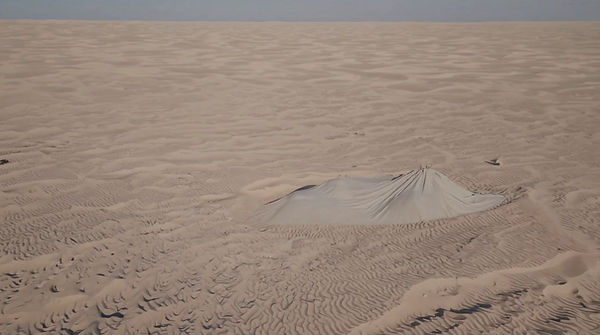
Visually, I.AM.2042 embraces simplicity without ever feeling minimal for its own sake. Each frame appears carefully considered, balancing stillness with subtle movement and allowing texture, light, and composition to communicate emotions that dialogue never could. The result is a film that feels less like watching a story unfold and more like entering someone else's internal landscape.
What makes the work particularly memorable is that it resists easy categorization. It is not science fiction despite its title, nor is it purely an experimental exercise. Instead, it exists somewhere between visual poem, personal testimony, and philosophical reflection. Its speculative setting functions less as a prediction of the future than as a lens through which to examine loss, remembrance, and the fragile persistence of identity.
Sara Niroobakhsh demonstrates remarkable discipline in allowing the film to remain unresolved. Rather than offering comfort or conclusions, she leaves space for uncertainty, trusting that what remains unsaid can carry as much emotional truth as what is spoken. That restraint becomes one of the film's greatest strengths.
At just over six minutes, I.AM.2042 accomplishes something increasingly rare: it asks viewers not to consume an experience, but to dwell within it. It is a quietly affecting work that rewards patience, reflection, and repeated viewing—proof that cinema can still communicate through atmosphere as powerfully as through plot.
For all this reasons I.AM.2042 won as Best Experimental Film Award at the June Monthly Competition of the Amsterdam New Cinema Film Festival.